
Introducing Horizons
Horizons are a way to thematically differentiate long-term states. Defining multiple horizons with distinct operating assumptions helps to direct activities and manage expectations across an innovation portfolio with varying conditions and requirements.
The idea is typically framed as some variant of three horizons: what is happening now, what will happen next, and what may happen in the future.
Operating logic is more important than time
Horizons can be thought of chronologically, but are more powerful as themes - each with a unique operating logic calling for a distinct approach. This core idea of operating logics is what distinguishes horizon thinking from chronological planning.
The earliest reference we've found to the idea is in The Alchemy of Growth, a 2000 book by a trio of McKinsey consultants that talks to the need to seed and nurture future growth whilst managing current revenue streams. Critically, they point to the need for concurrent activity across these horizons. We can't afford to ignore or delay action on Horizon 3 initiatives whilst we complete Horizon 1, or we risk never being in the position for them to emerge.
In their 2016 paper in Ecology & Society, academics Sharpe et al highlight the value of different logics as a way of supporting transition from our moment of ecological crisis to an aspirational future. The path from our present condition - the now - to an evolutionary future, lies through a transitionary state. They argue that horizons provide a way to nurture conscious imagining of alternative futures, manage the complexity of such a broad set of activities and distinguish between incremental and transformative change. In particular, they point to the benefit of explicitly named horizons in supporting dialogue between actors whose primary concerns are oriented to a particular horizon - and therefore bound to it's operating logic.
Horizons and creativity
In our own practice, we use Horizons extensively to support creative work and respectful dialogue across all 3 horizons.
Disciplined management of state recognises the operating logic of each horizon, and the varying pressures, constraints and opportunities they impose.
Paradoxically, by respecting the pressure and focus required of near-term horizons, we reduce the feasibility anxiety of conversations about the near term, and unlock creative freedom to consider longer-term horizons.
Working across horizons also supports better building towards desired outcomes in later horizons - we work on multiple horizons concurrently in order to directionally influence emergent futures. We build capabilities and options today, in order to create possibilities tomorrow.
Our horizons
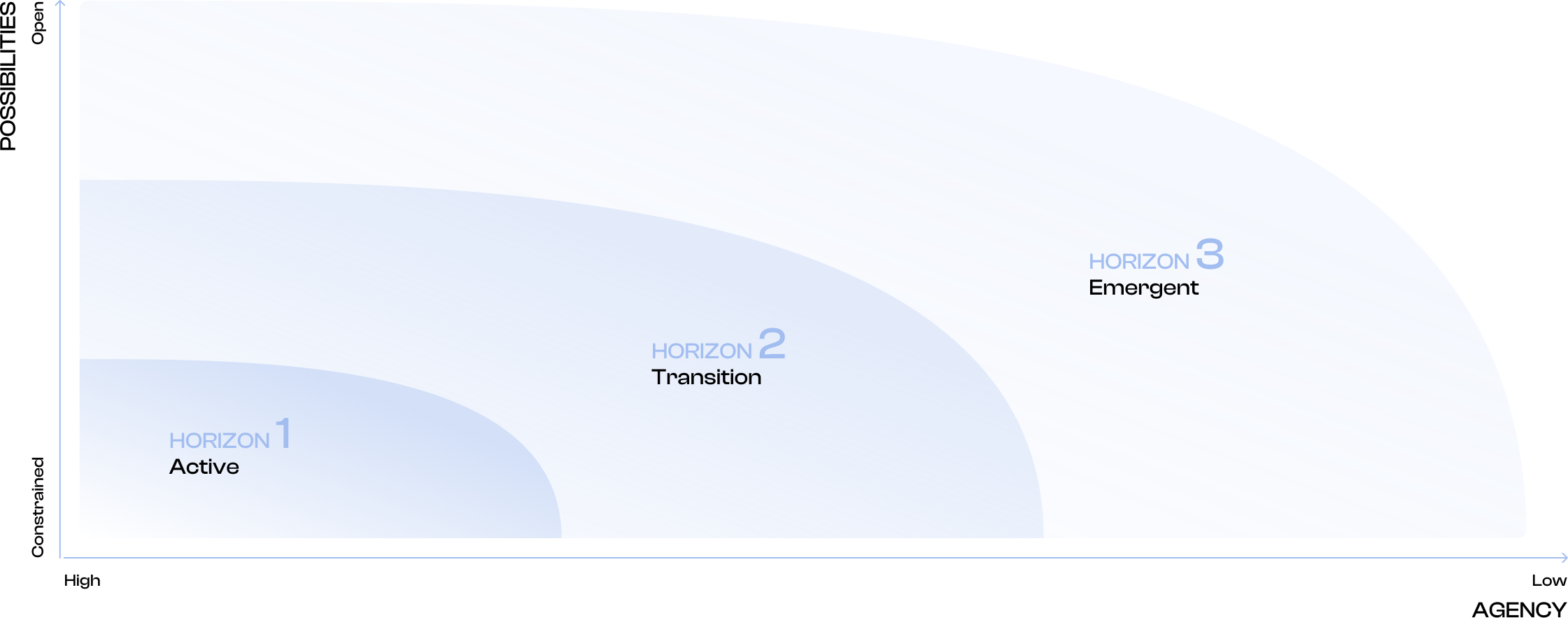
We typically frame initiatives across 3 horizons:
Active
This horizon's operating logic is definition. Teams are actively working within the constraints of this horizon, decisions have already been made and resources allocated. Change can be highly disruptive in this horizon and needs to be carefully managed and scoped. Constraints are very real and must be understood and navigated.
Transition
Change defines this horizon. There is an active conversation about direction and many live decisions that will create future constraints. The operating logic is still influenced by our active horizon, and though consideration of future possibilities is less threatening and even required, an element of reaction is likely. Change is likely to be instrumental and should be approached through well-managed processes with clearly defined options, decisions and risks.
Emergent
The emergent is by definition unknown. This horizon is best approached through possibilities and scenarios. In this domain we can operate with openness and creativity, imagining multiple viable or even unlikely options.
The cautionary note in this horizon lies in remembering that the future is emergent and our control limited. Too much certainty and definition in this horizon can be illusionary. Remember that the ambiguity of ideas from this horizon can be disorienting to those with more near-term imperatives - frame ideas clearly as horizon 3 to encourage more open dialogue.